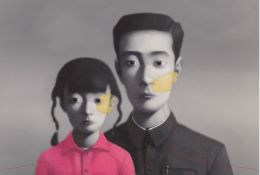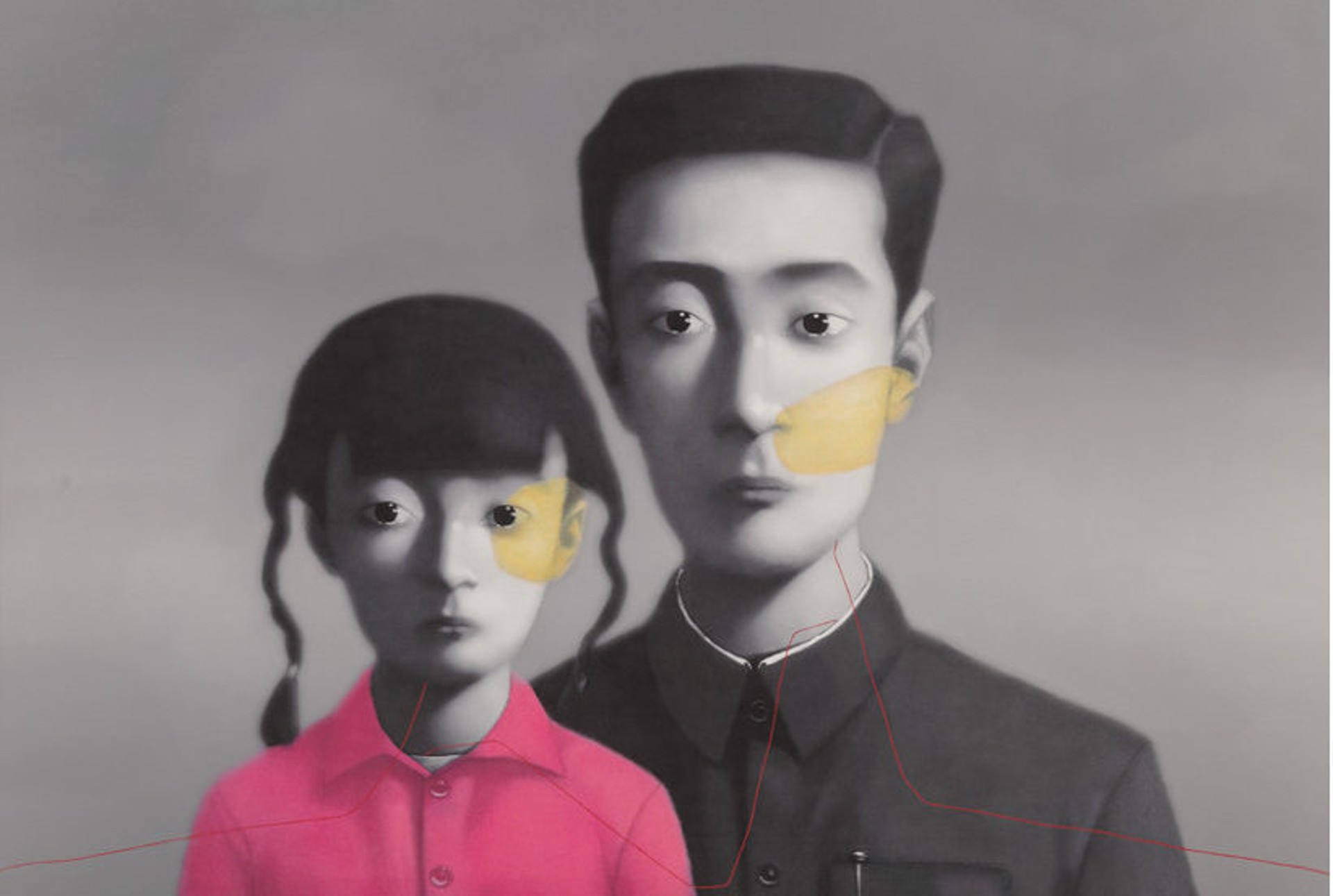
Zhang Xiaogang is a Chinese painter and preeminent member of the contemporary Chinese avant-garde. His Surrealist-inspired, stylized portraits executed in smoothly rendered oil paint maintain a formal and stiffly posed aesthetic, focusing on the aftereffects of the Cultural Revolution and the meaning of family, history, and memory in China today. Born in 1958 in Kunming, China, Zhang went on study painting at Sichuan Academy of Fine Arts in Chongqing. Forced to work construction and other odd jobs instead of teaching painting as he had intended, Zhang fell into a deep depression fueled by alcoholism, eventually leading to his hospitalization in 1984. Upon discovering an album of his family’s old photographs in the late 1980s, Zhang was inspired to create his Bloodlines series, the body of work for which he is now widely celebrated. He has been exhibited worldwide, notably including at Pace Gallery in New York, the 1995 Venice Biennale, and the Daegu Art Museum. He lives and works in Beijing, China.
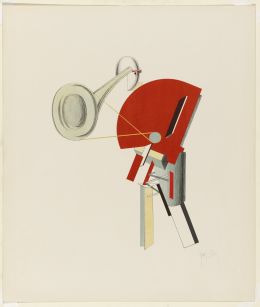
Lazar Markovich Lissitzky ( 23 November [O.S. 11 November] 1890 – 30 December 1941), known as El Lissitzky (Russian: Эль Лиси́цкий, Yiddish: על ליסיצקי), was a Russian artist, designer, photographer, typographer, polemicist and architect. He was an important figure of the Russian avant-garde, helping develop suprematism with his mentor, Kazimir Malevich, and designing numerous exhibition displays and propaganda works for the Soviet Union. His work greatly influenced the Bauhaus and constructivist movements, and he… more